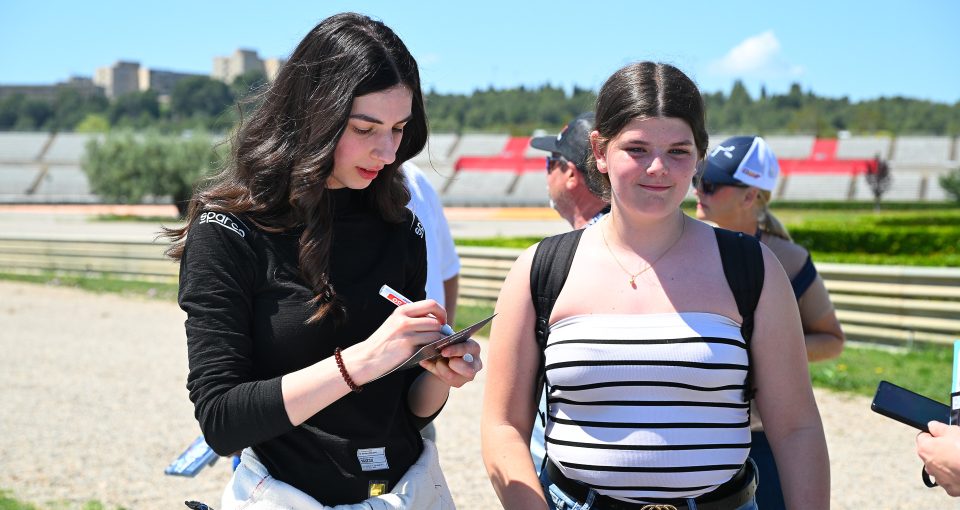
The Rookie Challenge becomes a flag ship to recruit drivers to join the NASCAR Euro Series OPEN and top-tier V8GP championships – Maral Ghazarian from Switzerland wants to follow the path
- The Rookie Challenge became the foundation of driver recruitment for the NASCAR Euro Series
- Maral Ghazarian is one of the most talented drivers on the 2026 grid
- The Swiss has a steep learning curve in the regularity based time-attack division
There is a sharp distinction between managing a race car and wrestling a heavyweight, steel-bodied beast. For drivers who spent their formative years steering lightweight, high-downforce open-wheelers or carbon-fiber prototypes, transitioning to American-style fender-banging isn’t a step backward. It is a complete reinvention of their racing craft.
The Rookie Challenge, European NASCAR racing’s time attack division, has quietly evolved into one of the most brutal learning environments in international motorsport. Far from being a mere introductory platform for novices, the division has become a vital career phase for seasoned pilots looking to master the completely different discipline of speed.
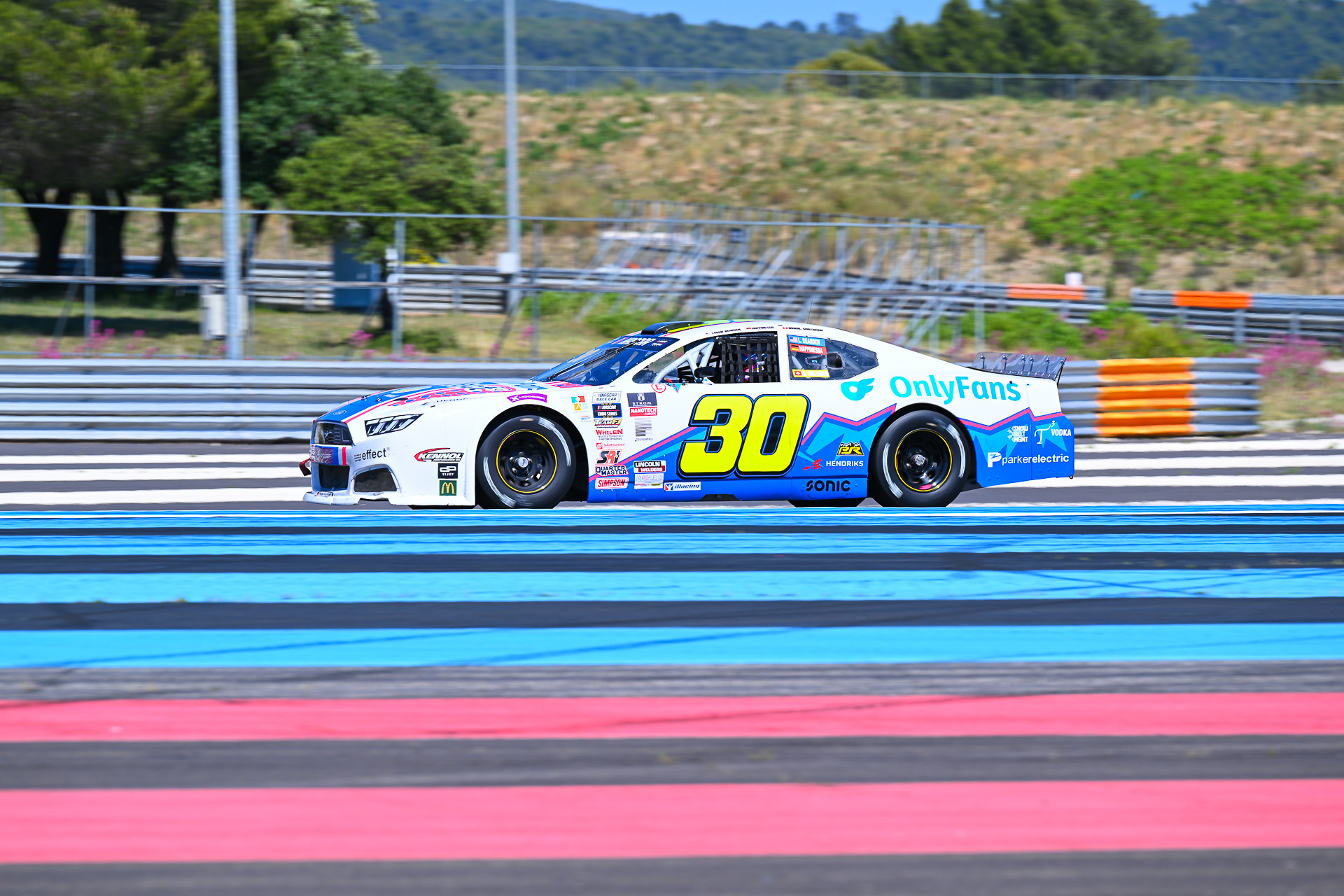
Among those currently navigating this trial by fire is Swiss driver Maral Ghazarian. Her journey to the grid in the #30 machine for the powerhouse Rette Jones Racing by Hendriks Motorsport alliance illustrates exactly why this development ground is essential – even for drivers who already know how to wheel a race car.
Unlearning the Rules of Momentum
To understand why an experienced driver needs a rookie designation in this series, you have to look at the physics of the machinery. Modern European road racing pipelines groom drivers on aerodynamics, paddle shifters, and sophisticated electronic driver aids like traction control and ABS. The cars of the NASCAR Euro Series strip all of that away, putting all of the control entirely to the driver’s hands.
With 400 horsepower sent directly to the rear wheels via a modern 5-speed sequential gearbox, these vehicles demand a brutal, physical driving style. You do not just slice through a corner; you handle 1,250 kilogram of steel and fiberglass through the apex, managing severe weight transfer while hunting for grip on bias-ply tires.
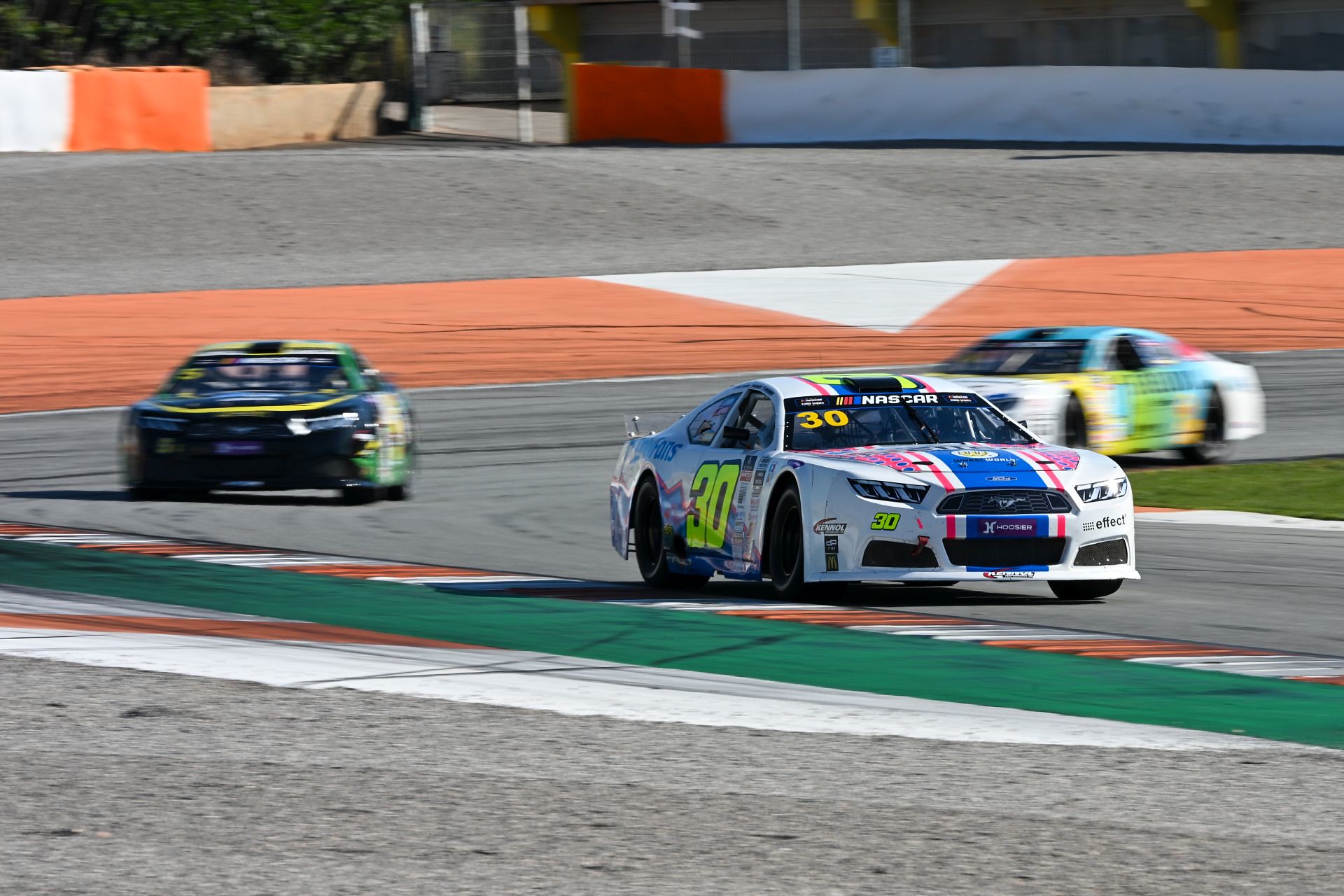
For Ghazarian, who spent her previous seasons adapting to nimble, high-downforce Radical prototypes across Europe and the Middle East, the learning curve is steep. In a prototype like the Radical, speed is derived from aerodynamic efficiency and late braking. In this arena, it’s about slow-in, fast-out power management and surviving fender-to-fender traffic where drivers routinely trade paint without lifting.
The Rookie Challenge gives drivers the playground they need to unlearn their open-wheel and prototype habits. You don’t need to race your rivals; you simply need to acclimatize yourself to the demands of the NASCAR race car and be consistent with your target times. This provides drivers with the space to log crucial seat time, figure out how these heavy cars abuse tires over a long green-flag run, and master the art of heavy-vehicle braking zones without the crushing pressure of the top-tier championship fight.
Ice in the Veins: A Non-Traditional Pipeline
Ghazarian’s presence in the paddock is a testament to how the modern talent pipeline has changed. She didn’t follow the traditional, multi-million-dollar karting ladder from childhood. Instead, her spark came from post-pandemic streaming docuseries and a viral talent-search initiative on social media that led her to the UK-based Formula Woman program in 2022.
When that organization collapsed due to sudden bankruptcy in mid-2025 – just days before a massive flagship event in Dubai – Ghazarian didn’t back down. Alongside a core group of independent female drivers, she self-funded a private testing program at Abu Dhabi’s Yas Marina Circuit, eventually forcing her way onto the grid of the Radical Cup UK at Donington Park.
That display of sheer resilience caught the attention of veteran driver Gil Linster and series officials, leading to her entry to a last-minute recruitment test in France in early 2026. Within weeks, she was strapped into her current ride, adjusting to the unique culture of American-style garage access and a packed grandstand of fans hungry for close-quarters racing.
The Short-Session Hurdle
Currently sitting ninth in a deep, highly competitive regularity based time-attack Rookie Challenge, Ghazarian has shown the exact type of consistency required to build a professional career, frequently banking steady top-10 finishes. Yet, the transition highlights the exact reason why this developmental phase is so critical. Her biggest hurdle during the 2026 campaign hasn’t been race craft, but the clock.
“My biggest challenge right now is maximizing the short practice windows,” Ghazarian noted during a recent race weekend. “It takes time to get these heavy cars dialed in and to feel where the tire grip is. By the end of a session, I feel like I can push significantly faster, but in this format, you have to find that limit on lap one.”
In a series where practice time is strictly rationed, experienced rookies must learn to generate peak speed on cold tires immediately – a skill that separates the mid-pack from eventual championship contenders.
Ghazarian’s immediate blueprint involves leveraging this rookie campaign to secure a full-time seat in the Open division next season, with an ultimate career eye on the 24 Hours of Le Mans. But for now, the path forward goes straight through the grueling, fender-banging classrooms of the Rookie Challenge that produced many drivers to step up to the competitive OPEN and also the top-tier V8GP championship.
Featured image by NASCAR Euro Series / Nina Weinbrenner